See Why People Don’t Click
Analysis trained on patterns from thousands of A/B tests and real visitor behavior.
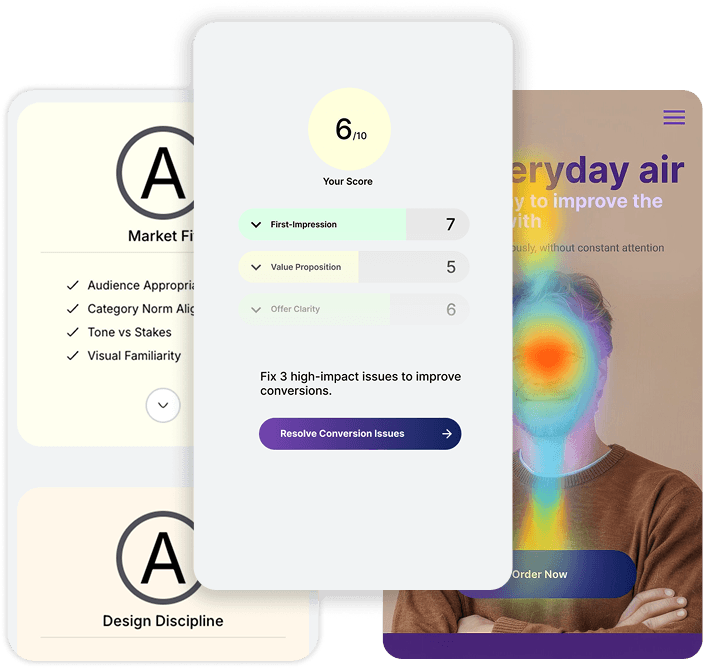
What you get:
- Eye-Tracking Heatmap
- Priority Actions
- Optimized Copy Draft
What Glinter reveals about your page
The scan reveals how visitors experience your page and where the decision breaks.
See what’s stopping visitors from clicking
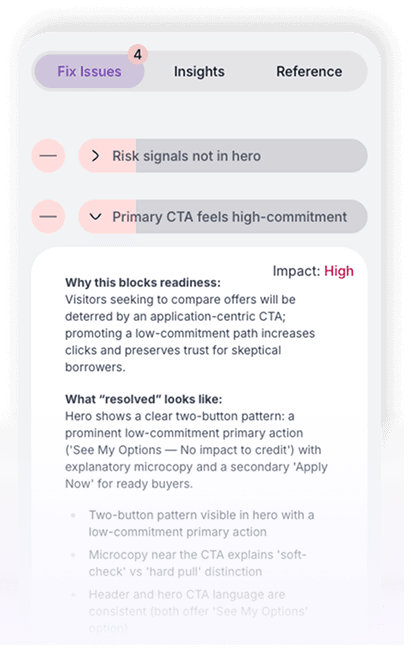
Shows the specific problems holding your page back — from unclear value propositions to missing trust signals.
See how your page guides decisions
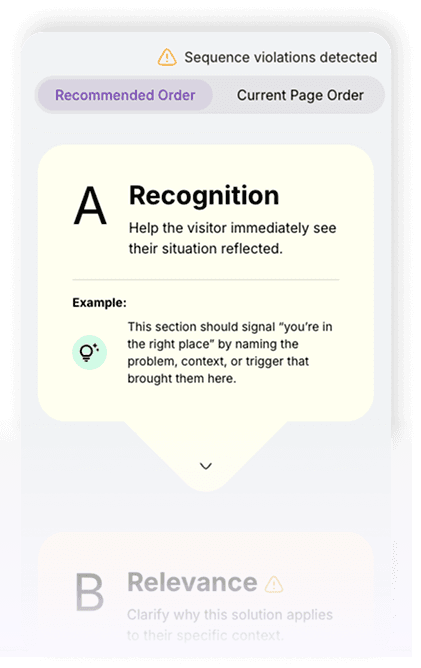
Checks whether your page follows the psychological order visitors need to move from recognition to action.
See where visitors actually look first
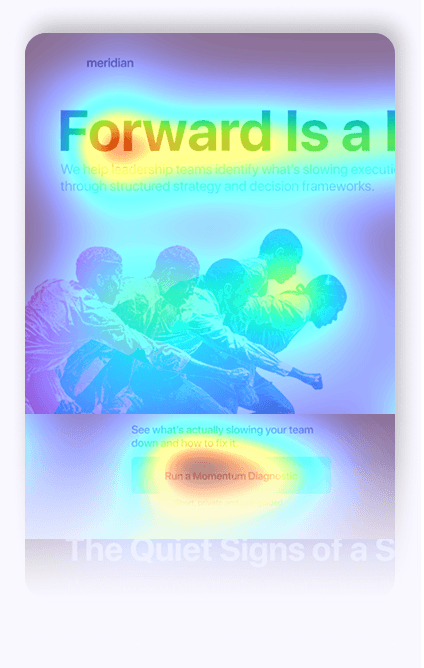
Predictive eye-tracking reveals which elements capture attention first and which parts of your page are effectively invisible.
How Glinter surfaces what stops action
Glinter follows the path a visitor takes, and shows where momentum breaks.
Shows why people leave immediately
Glinter shows what’s unclear or confusing in the first seconds.
Shows why they scroll but don’t click
See where interest drops and momentum breaks.
Shows why they click, then disappear
Surface friction and doubt that stops follow-through.
Shows why forms get started not finished
Identify trust gaps and hesitation points.
Shows why “looks fine” still doesn’t work
Find where explanation replaces persuasion.
Shows why traffic doesn’t turn into action
See how structure, clarity, and intent misalign.
What Glinter gives you
Glinter follows the path a visitor takes, and shows where momentum breaks.
See the problems clearly
A plain-language breakdown of what’s blocking action and where visitors lose momentum.

Know what to fix first
The few issues that matter most, in the order they affect decisions.

A better version of your page
Clear guidance and rewritten sections you can immediately test.

What our early testers are discovering

Joey Licata
I immediately saw issues on the page that I’d completely missed, even after working on it for months.

John C. Poyser
This was the first time a site analysis actually told me what to fix, not just what was wrong.

Anthony McLaughlin
Once I read the breakdown, I couldn’t unsee the problems anymore.
Backed by experience working with organizations including:




Your Questions, Answered Simply
Yes, by showing you what’s stopping people from taking action.
Most sites don’t fail because of design. They fail because key signals, clarity, trust, value, and momentum, aren’t landing in the right order. Glinter identifies where those breakdowns happen so you can fix the things that actually affect decisions.
Glinter analyzes how your page communicates, persuades, and asks for action, step by step, from a visitor’s point of view. It evaluates whether the right signals are present and whether they appear at the moment people need them to decide.
You’ll get:
- A clear breakdown of what’s blocking action and why
- A short, prioritized list of fixes that matter most
- A rewritten version of your page copy you can use as a starting point
The goal is to give you direction you can act on immediately.
No.
The output is written in plain language and focuses on decisions, not metrics. You don’t need analytics, CRO knowledge, or tooling experience to understand what it’s showing you.
You decide.
You can apply the changes yourself, hand the output to a designer or developer, or use it to guide deeper optimization work. Glinter’s role is to show you what to fix first so you’re not guessing.
You can run an initial analysis to see how Glinter works and review the results.
During beta, usage may be limited to keep the system reliable. If there’s ever a cost involved, you’ll see that clearly before continuing.
See what’s stopping people from clicking
Enter your site URL and get a clear breakdown.

Steven Goldhar
It explained why people weren’t clicking in a way that finally made sense.

Judy Ross
The rewritten copy alone was worth it as a starting point.

Warren Sprau
It felt like having a CRO expert walk through the page with me.